New asphalt paving is the right call when a lot is being built for the first time, expanded, or replaced because the base under the old pavement has failed. Miami Parking Lot Paving builds commercial parking lots, access roads and private roads across Miami-Dade, Broward and Palm Beach counties, with the base and the drainage designed for flat ground, a high water table and summer storms.
This page covers what a new paving job includes, why the base matters more here than almost anywhere else, the process step by step, how asphalt compares with concrete on a commercial site, and the questions to ask before you sign with anyone.
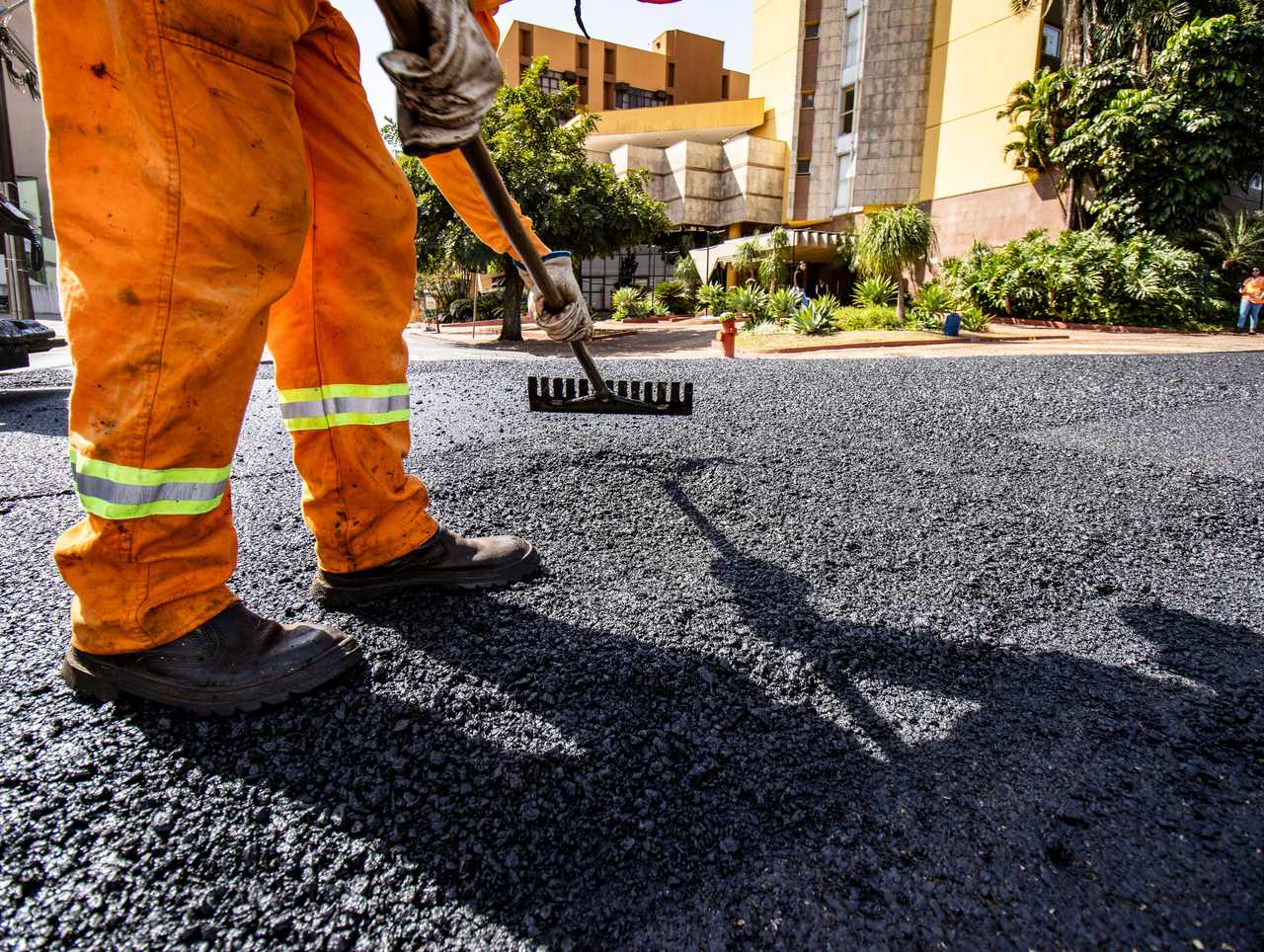
A complete new asphalt lot is five layers of work: site preparation, a compacted base, one or more courses of hot mix asphalt, drainage structures, and striping. Thin or skip any one of them and the others fail early. Here is what each part covers on a commercial job.
An overlay only works when the base underneath is still sound. When the damage starts below the surface, new paving is the honest answer, and these are the signs that point to it.
If the base is solid, asphalt resurfacing costs less, takes less time and delivers a surface that looks new. The site assessment settles which one your lot needs, and the estimate separates the two so you can see the difference.
In South Florida, the base and the drainage decide how long a lot lasts. The ground is flat, the water table sits close to the surface, and the summer storms are heavy, so any water that is not moved off the pavement quickly ends up in the base.
Limestone sits a short dig below the topsoil over most of the county. That is good news for support when the base is compacted on it properly, and a cost driver when the grade plan requires cutting into it. Where the native material is soft or wet, the fix is more base thickness and better compaction, not more asphalt on top.
Drainage on a flat site is designed, never assumed. Typical layouts use a slight cross slope toward curb and gutter, catch basins at the low points, and trench drains where trucks back up to docks. The target is plain: no standing water anywhere on the lot the day after a storm.
Water that lingers on asphalt seeps into hairline cracks and softens the base underneath. That is why a lot with poor drainage develops alligator cracking long before a well-drained lot next door shows any wear. Building the drainage right costs less than the repairs a wet base produces.
A new lot follows 8 steps, and a property manager can plan around every one of them. The schedule in your written scope names which steps run during business hours and which run at night or on weekends.
We walk the property with you or your manager, measure the lot, check existing grades, drainage, utilities, entrances and the accessible route, and note how tenants, deliveries and dumpster pickups use the lot. Those operating details shape the phasing plan.
You receive a written scope with the asphalt section by traffic zone, the drainage plan, a striping layout that includes accessible spaces and fire lanes, a phasing plan and a schedule. Repair, resurfacing and replacement options are separated so nothing is hidden inside one number.
Your contractor checks the city or county requirements for the scope and builds them into the timeline. Tenant and customer notices go out with dates, closures and temporary parking so nobody is surprised.
Old pavement is removed and hauled, the site is excavated to the design depth, and the subgrade is rough graded toward the drains. This is the noisiest step, so it is scheduled for the window that hurts your business least.
Limerock base goes down in lifts, each one compacted and checked for density before the next. No asphalt is placed until the base passes, because a soft spot found now costs a fraction of one found after paving.
The structural course is placed hot and rolled to density, then the surface course follows. Joints between phases are planned to fall along stall lines rather than down the middle of a drive aisle, where a seam would take the most wheel traffic.
Cars stay off the mat until it has cooled, and tight-turning trucks stay off longer. Barricades and signs mark the closed section, and the open sections keep entrances and the accessible route working.
Once the surface is ready, stalls, arrows, fire lanes, accessible spaces and signs go in per the approved layout. We walk the finished lot with you, confirm drainage after the first rain if the timing allows, and hand over a maintenance schedule.
Asphalt wins on initial cost, speed and repairability for most commercial parking areas. Concrete wins where heavy loads sit still in one place, such as dumpster pads and trailer parking, and it tolerates standing water better. Most South Florida properties use both: asphalt for the stalls and drive aisles, concrete for curbs, pads and dock aprons.
| Factor | Asphalt | Concrete |
|---|---|---|
| Initial cost | Lower per square foot | Higher per square foot |
| Time to reopen | Usable within a day or two once cooled and striped | Several days of curing before traffic |
| Repairs | Patch, mill and overlay by section; repairs blend in | Slabs are replaced whole; patches show |
| South Florida heat | Softens under extreme heat and stationary loads; dark surface runs hot | Stays rigid in heat; lighter surface reflects sun |
| Heavy loads | Needs a thicker section in truck lanes | Best for dumpster pads, dock aprons and trailer parking |
| Striping | High contrast on a fresh black surface; sealcoating restores it | Lower contrast; lines last longer without sealcoating |
| Maintenance rhythm | Crack sealing and sealcoating on a schedule | Joint sealing; fewer routine tasks |
| Best use on a commercial site | Stalls, drive aisles, private roads | Curbs, gutters, pads, aprons, sidewalks |
The mixed approach is the usual recommendation: asphalt where cars park and drive, concrete curbing, pads and aprons where drainage and heavy loads need it. The estimate prices each material by area so you can see what the concrete portions add.
A paving job does not have to close a property. The lot is split into phases, each phase is scheduled for the hours that cost you least, and every phase keeps an entrance, the accessible route and the fire lane open. Here is how that works on a typical retail, office or industrial site.
As a ballpark only, full new commercial asphalt construction in the Miami area typically lands somewhere between $2.50 and $7.00 per square foot, with overlays and repairs usually costing less per square foot. The spread is wide because the items below vary so much from one lot to the next. The written estimate replaces the ballpark with a number for your property.
For a longer look at how new construction, overlays and repairs compare, and how to read 3 estimates line by line, see the guide to parking lot paving cost in Miami.
The estimate that looks cheapest is often the one that left something out. These questions surface the differences between bids before you sign.
Send the approximate lot size, whether this is new construction or a replacement, and what the lot is used for. A paving assessment covers base condition, drainage and the traffic zones so the estimate shows section thickness by area, the drainage plan and a phasing schedule that fits your business hours.
Related services: Asphalt Resurfacing, Concrete Curbing. Service areas: Doral, Miami-Dade County. Guide: Parking lot paving cost in Miami.